River Mountains Loop Trail

Facebook icon

  • Home
  • About
  • Trailheads and Maps
    • Trailheads in Boulder City
    • Trailheads in Henderson
    • Trailheads in Lake Mead NRA
  • History
    • Geology of the River Mountains
    • A -Desert Tortoise – Do’s & Dont’s
    • Keep It Clean
  • Blog
    • Recently on Facebook
  • Contact
    • Contact List
  • Donate

Bobcats – Roam the River Mountains


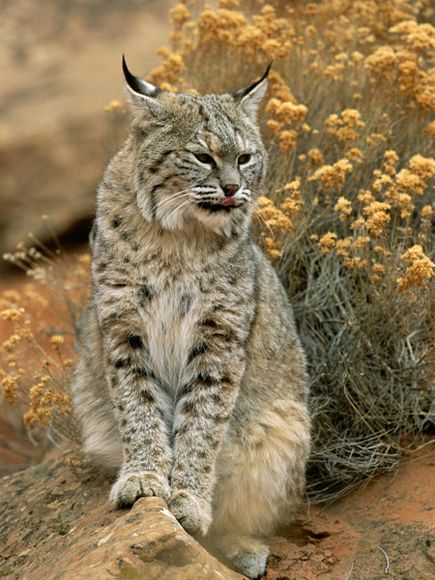
Bobcat in the wild.

Bobcat, (felis rufus) file photo

Since the subject of wildcats has come up this week lets talk about the real wildcat of the River Mountains area. More specifically called the “Bobcat” (Felis rufus or Lynx rufus).  The Bobcat is rarely spotted or seen by humans as they are very elusive and nocturnal. This cat is named for its tail, which appears to be cut off  or “bobbed.”  His other identifying feature is his “tufted” ears.  A bobcat is generally twice the size of your house cat and has long legs, large paws, is brownish in color with a white underbelly.

Bobcats are fierce hunters and can kill prey much bigger than themselves, but generally eat rabbits, birds, mice, rats, squirrels and other smaller game.  With there close proximity to urban develop around the River Mountains they may also enjoy house cats and small dogs from time to time.

Bobcats are solitary animals.  Females choose dens in secluded areas to raise a litter of kittens ranging in number from one to six.  The kittens will remain with their mother up to 12-months while learning to hunt before heading out on their own. Bobcats may range an area up to 80-square miles or an area that is less than one square mile, depending on food availability.

In the River Mountains Bobcats have been seen feeding on Desert Big Horn Sheep lambs in the spring.

If you are ever hiking alone in the River Mountains and all of a sudden you get that feeling that you are not alone – that something is watching you and chills run up and down your back – Bobcat!
Mountain Lion sighted Near Trail

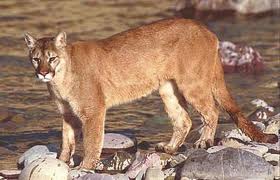
Dec. 16, 2010 – Boulder city, NV. – According to a report in the Las Vegas Sun this a.m. a mountain lion was recently sighted near Keyes Drive in Boulder City.  Keys Drive going east turns into the Old Historic Railroad Grade/trail which in turn becomes part of the River Mountains Loop Trail system.   Mountain Lions have always been part of the wildlife mix in the River Mountains, just not seen that often.  These big cats have a taste for Desert Big Horn Sheep and the River Mountains are home to one of the largest reproducing herds in the State of Nevada.  The LV Sun goes on to report that yearling cats are often booted out of their home this time of year to fend for themselves, so they are looking for their own territory to roam and hunt.

Mountain Lion

Mountain Lion file photo….

Mountain Lion file photo….

National Park Service Advice for Mountain Lion Encounters:

  1. Avoid behavior that may attract a mountain lion. Avoid hiking or jogging alone. Children shouldn’t run ahead on a trail.
  2. If you see a mountain lion:  Remain calm. Never run.!!! Report the sighting to the Nevada Department of Wildlife at 702-486-5127.
  3. If you encounter an aggressive mountain lion: Do all you can to appear large and threatening. Hold your ground. Wave your arms. Shout. Throw rocks if the lion approaches.

If you have a cell phone and feel in immediate danger, call 911.

Note: Since 1999 when the trail became operational, this is the first reported sighting near the trail.

SNAKES….SNAKES ON THE TRAIL


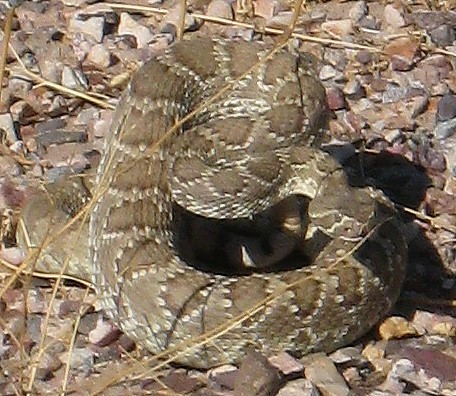
Western Diamondback snake —file photo


We  get many reports from trail users about snakes on the trail; most are rattle snakes some are gopher snakes.  All snakes are part of the wildlife scene along the trail.  Please leave them be.  It was a very wet winter and spring thus more snakes are about.  Our rattler friends are seen early morning on the trail as they lay in sun and warm up and late evening again on trail to keep warm.   We have the Western diamondback, Sidewinder, and the Mojave Green frequenting the areas along the trail.

Mojave Green Rattle snake – file photo

I had a report of a rattler 38″ long on the trail this past weekend…..I’m curious how they got the snake to lay out so they could get that measurement without getting bitten.   Oh, well a snake that long could be a Mojave green which are very poisonous.  A Mojave looks much like a diamondback but has  greenish hue and the diamonds fade out near the tail, not that I’m going to stick around and find out.

Every year we hear about dogs getting bitten near the trail; the primary reason is they are off leash. Protect your dogs by keeping them safe on leash.

Camera…….Action…..On the trail this spring

March 19, 2010 –  By tomorrow winter is over and spring is here.  Get your camera’s out and hit the trail.  With the wet winter, well over 3″ of rain, our desert trail will look like a trail through green fields.  Well at least for the next month or two. Wild flowers and wild life should be abundant.  And remember, Henderson has a photo contest each fall during National Trails Day for the best trail photos taken in Henderson.  I’ll be out this weekend with my camera and hopefully next week I can post a few green photos here to prove my point.

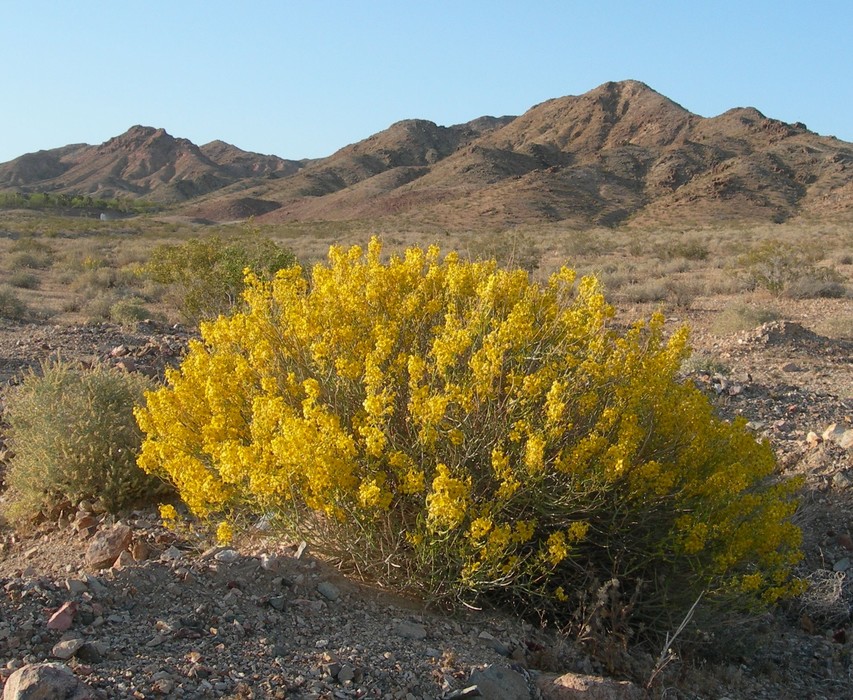
Wildflowers Spring 2009

You can ride your bike, but I prefer to walk/hike it that way you would miss anything….Tortoise will be out soon and so will snakes so watch out.  I got a great photo last fall of a brown Tarantula on the trail; spring last year several tortoise photos.  Other friends have photos of big horn sheep on trail etc.

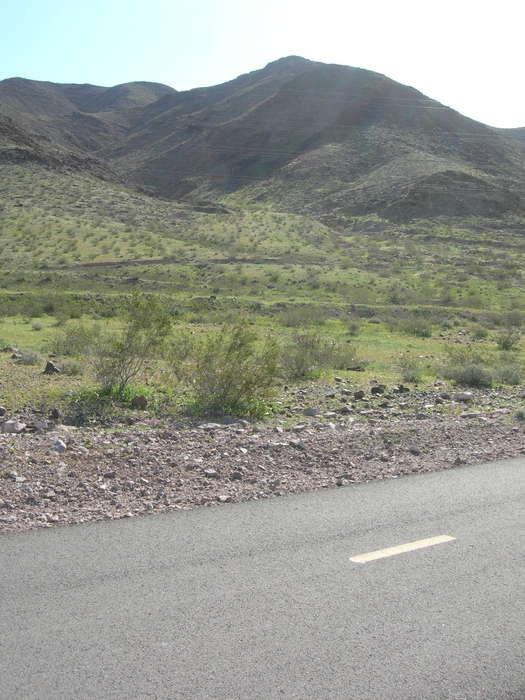
RMLT Desert Green Mountains at Railroad Pass 3-20-2010


Here is a photo I took in Spring 2010 which I entered into Henderson’s Trail photo contest and won second in this category…

Wildflowers & bike riders Lake Mead April 2011

Coyote Awareness & Education part of the Solution

March 12, 2010 –  Coyote sightings, coyote stories, coyote letters to editor, coyote TV news….Mr. Coyote has been everywhere in Southern Nevada lately.  So far he has not had a staring role in a horror movie, which undoubtedly would be called  ‘”Attack of the Killer Coyotes”.  The purpose of this new post on coyotes is to help you; our readers and trail users get connected with good information about coyotes and become aware of these wild creatures.   I recently came across this very informative website for an organization called “Project Coyote”.    

Their mission is as follows:  Project Coyote promotes educated coexistence between people and coyotes by championing progressive management policies and fostering respect for and understanding of America’s native wild “song dog.”   

Please visit their website at: www.ProjectCoyote.org   

Our trail advisory council is looking into posting the following informational sign at key trail head locations to increase our Awareness of Coyotes. 


ProjectCoyote.org

Discovery Trail – History, Wildlife, Forces of Nature, Educational Tool


DISCOVERY TRAIL –  Yes, I believe the River Mountains Loop Trail is a discovery trail.  It is a great place for families to discover the desert world around them.  Young kids need a chance to explore and discover the world around them.  This is free for the taking sort of speaking.  At the various trail heads history or nature is intrepreted  for the user.  Along the trail waysides are being designed an installed telling about the history, wildlife, plants or some force of nature.  Plus there is the experience of discovering nature for yourself right there on the trail.  I tell many of my friends and hiking buddies that if they really want to see the world around them, then “Take a Hike” in it. 

Trails are all about discovery….what is around the next bend?…over the next hill? under the next tree or bush?  what is that old structure over there?…where do those power lines come from….where are they going?…what type of cacti?…bird, rabbit, snake, bug, lizard, rock, bush, etc? is that.  Do animals really live in the desert?  What types?

If one does a little reading and research before heading out on the trail you will be amazed at the local history right here in your back yard.  One of the goals of the River Mountains Trail Partnership is to help all trail users discover what the River Mountains has to teach us.   Take a little time read some of the BLOG categories and discover.  I have been at this about 18 months and have only discovered the tip of the iceberg.

Many of you ride the trail on bikes for recreation and exercise, but you are missing the discovery.  It is my personal goal over the next year to walk/hike every mile of the trail and personally discover all it has to offer.  How about you?

Here are just a few things along the trail to be Discovered and in no particular order:  HOOVER DAM…SADDLE ISLAND…FISH HATCHERY…RED MOUNTAIN…ALUNITE MINE…RAILROAD PASS…BOOTLEG CANYON…FLOOD CHANNELS… POWER LINES…GOLD MINES….THREE KIDS MINE…MOVIE FILMED HERE…MAGIC TREE…BMI WATER LINE…WATER RECLAMATION…COYOTES…BIG HORN SHEEP…BEAVER TAIL CACTUS…CRESOTE BUSH…TEXAS ACRES…SIXES COMPANY…HISTORIC RAILROAD…DESERT TORTOISE…MANGANESE MINING…AND SO ON.

Coyotes part of living in Southern Nevada by NDOW

January 19, 2010 – Here is the poop on Coyotes in Southern Nevada straight from the horses mouth, Nevada Department of Wildlife. This as you will see appeared in the Las Vegas Review Journal January 17th, 2010 under Outdoor Briefs.. It makes good reading and covers many of the items found on coyotes elsewhere in this BLOG.

________________________//

Jan. 17, 2010
Copyright © Las Vegas Review-Journal 
Coyotes part of living in Southern Nevada

Like many communities across the Southwest, those in the Las Vegas Valley have seen residential and commercial development reach into areas that were previously undeveloped. As it has elsewhere, that development has had a direct impact on numerous wildlife species and their habitats. While some species suffer from the impacts of urban development, the wily coyote continues to thrive.

From their original haunts, which extended from parts of north-central Mexico to southwestern Canada, coyotes have extended their range to nearly all of North America. Their range includes urban centers such as Los Angeles, Phoenix and Las Vegas.

“The amazing thing about coyotes is their ability to adapt and adjust to changes in their natural environment and to the challenges of living in an urban environment. They can sometimes be seen roaming areas located on the outskirts of the Las Vegas Valley and even farther into town,” said Doug Nielsen, conservation education supervisor for the Nevada Department of Wildlife.

A popular drawing card for Southern Nevada homebuyers are golf courses, water-based landscape design and life on the edge of natural surroundings. What homebuyers often fail to realize is that these qualities are just as attractive to a variety of wildlife, coyotes and other predators that are already living in the Mojave Desert.

“Oftentimes people buy homes on the desert’s edge so they can have a more natural experience, but they want to pick and choose what critters come to visit. It just doesn’t work that way,” Nielsen said. “Golf courses, landscaping with water features, and washes or other avenues that provide animals with direct access to and from open desert areas will sooner or later attract prey species such as squirrels, rabbits and birds. These species then become an attractant for coyotes and other predators looking for a meal.”

Though coyotes have been known to hunt and eat domestic pets, simply seeing one is not necessarily cause for alarm. Nor is it necessary to call NDOW. However, a call may be warranted anytime a coyote is showing threatening behavior toward people, especially children. The key to preventing possible conflicts with coyotes or other wildlife, according to NDOW, is to eliminate those things that attract them, beginning with possible food sources.

Never feed coyotes and encourage your neighbors not to feed them. Wild animals quickly become habituated to humans as a food source. Store pet food inside and feed pets inside if possible. If a pet must be fed outside, clean up any uneaten food.

Pets, especially small ones, should not be left outside unattended. This is especially true at dawn or dusk when coyotes are most active. If it is necessary to leave a small pet outside unattended, consider keeping it in a sturdy enclosure with a roof. It’s also a good idea to trim or remove any ground-level shrubs and branches that could provide coyotes with a hiding place.

Coyote attacks on humans are a rare occurrence, and when it does happen, the attacks are generally directed at young children.

Should you encounter a coyote, make loud noises, wave your hands or objects such as a stick or broom, or spray the coyote with water from a garden hose. Don’t turn away or run, because that may trigger the animal’s predator extinct, but don’t corner a coyote either. Give the animal room to escape.

More information about living with coyotes can be found online at www.ndow.org.

Desert Bighorn Sheep of the River Mountains

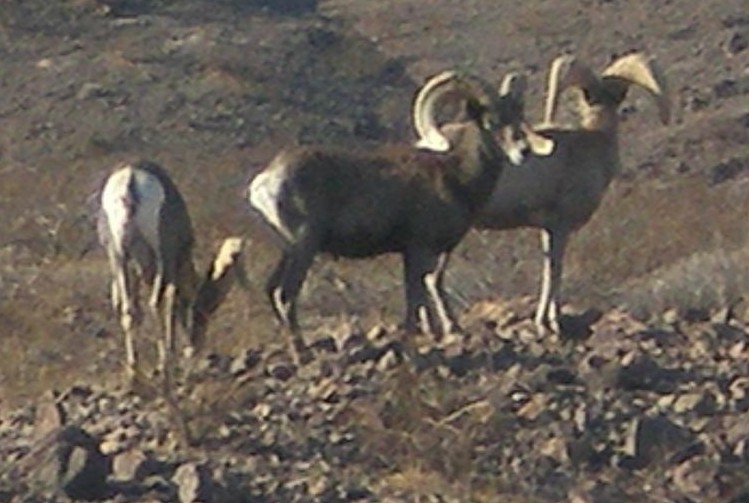
Desert Bighorn Sheep (Ovis Canadensis) – Range throughout the River Mountains an are often seen on or next to the trail.  Rams grow to 5 to 6 feet long, ewes grow 4 to 5 feet; study, muscular build; brown to tan with white belly, rump, muzzle and eye patches.

Three Bighorn Ram sheep near the trail – photo by Paul G. 112408

Rams have massive horns that grow over and behind the ears in a C-shaped curl.  Horns are permanent and grow incrementally year by year.  It may take 7 to 8 years for a ram to acquire a full curl. Ewes have a shorter, more slender horns that curve gently back.

The River Mountains are perfect habitat;  for the bighorn sheep occupy rough, precipitous terrain near sources of permanent water.  Bands follow regular feeding routes and maintain bedding grounds that may be used for years.  The desert bighorn sheep is Nevada’s state mammal.

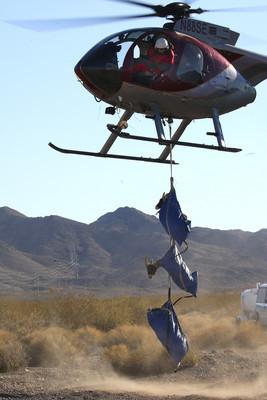
The sheep population in the River Mountains is estimated at 200+.  In order to protect this herd of sheep the BLM has designated a good portion of the Northwest mountain range as an “Area of critical Environmental Concern” (ACEC) to help protect this productive herd of bighorn sheep.  Each year to keep this herd in balance the National Wildlife Service culls the herd by capturing sheep and re-locating into other mountain ranges in Nevada and elsewhere in the west.

RJ photo – Bighorn sheep capture fall 2007 in the River Mountains

The symbol or image used to identify the River Mountains Loop Trail is an image of a Bighorn Sheep on a mountain with the sun rising behind or the moon.  The sheep image is copied from the local rock art symbol for bighorn sheep used by Native Americans. This logo is used on maps, trail kiosks, trail monuments etc.

River Mountains Loop Trail logo – Bighorn sheep on Mountain with Sun rising behind

Photo Gallery Big Horn Sheep:

Desert Tortoise

Desert tortoise (Gopherus agassizi) – Nevada’s official state reptile, is the only naturally occurring tortoise in the Mojave Desert and is on the U.S. fish and Wildlife Service’s Endangered Species List. Over 6 million acres within the Mojave Desert, including over 1 million acres in southern Nevada, have been designated as critical habitat for the desert tortoise(areas that require special consideration and protection). This special consideration includes construction of tortoise fences in areas where highways or construction sites conflict with the tortoise life-style.
Desert tortoise are quiet and unassuming creatures, they spend most of their lives underground in winter dens and summer burrows where they are protected from the temperature extremes of the Mojave Desert. They are long-lived vegetarians, and are so efficient in their water usage that they can survive for more than a year without access to “free” water ( water derived from sources other than the plants that they eat). 

Desert Tortoise on trail by john

The desert tortoise population has been decreasing in recent years throughout the western Mojave Desert.  One of the major factors in this decline is thought to be destruction of tortoise habitat by urban development.  This is especially critical in areas surrounding Las Vegas where the city is rapidly expanding into prime tortoise habitat. 

If you are lucky enough to see one of these elusive desert dwellers, DON’T TOUCH OR PICK IT UP.   They tend to lose water if picked up, to the tortoise it could be fatal to lose this stockpiled water. 

****** 

Note:  The River Mountains is home to a large population of Desert Tortoise. The River Mountains Loop Trail passes through prime tortoise habitat and they are often seen near or on the trail.

White-tailed Antelope Ground Squirrel

White-tailed antelope ground squirrel

The White-tailed Antelope Ground Squirrel (Ammospermophilus leucurus) is gray with a narrow white stripe along each side.  The underside of its tail is white and is carried over its back.  One of the few small mammals to be active in the heat of the day, this animal is superbly adapted for desert life: 

  • It is omnivorous(feeding on both plants & animals) and prefers water-filled plants and insects.
  • It tolerates a nine-degree fluction (100-109 degrees F) in body temperature as it moves in and out of the sun.
  • It can salivate heavily and spread mositure over its neck and cheeks for evaporative cooling effect.
  • It can lose heat by conduction when it retires to the shade or is burrow and flattens itself against the ground.
  • It will postion itself parallel to the Sun’s rays and shade its body with its tail.

Editors note:  These guys in urban areas can become real pests digging up golf course greens and of course your lawn at home.

Next Page »

Recent Blog Posts

Dogs on the Trail

Las Vegas Hiking Trail Featured in Article

Las Vegas Hiking Trail Featured in Article

Pacifica trail head Boulder City on the new trail website.

New Trail Website

Be Sure to Visit

Latest Posts on Facebook

Comments Box SVG iconsUsed for the like, share, comment, and reaction icons
Author Avatar
River Mountains Loop Trail
2 weeks ago
Come and join us on

Come and join us on March 14th! ... See MoreSee Less

View on Facebook
· Share
Share on Facebook Share on Twitter Share on Linked In Share by Email
View Comments likes 3 Shares: 0 Comments: 0

0 CommentsComment on Facebook

Author Avatar
River Mountains Loop Trail
4 weeks ago

Love our trail! ... See MoreSee Less

View on Facebook
· Share
Share on Facebook Share on Twitter Share on Linked In Share by Email
View Comments likes love 6 Shares: 1 Comments: 3

3 CommentsComment on Facebook

Author Avatar
River Mountains Loop Trail
1 month ago

FYI... For those who ride and hike Historic railroad trail....

... See MoreSee Less

Link thumbnail

Grant for erosion repairs will improve Historic Railroad Trail at Lake Mead

www.msn.com

A $250,000 grant from the James M. Cox Foundation, the charitable arm of Cox Enterprises, will support erosion repairs for the Historic Railroad Trail near Lake Mead.
View on Facebook
· Share
Share on Facebook Share on Twitter Share on Linked In Share by Email
View Comments likes 11 Shares: 0 Comments: 0

0 CommentsComment on Facebook

Load more

View Full-Sized